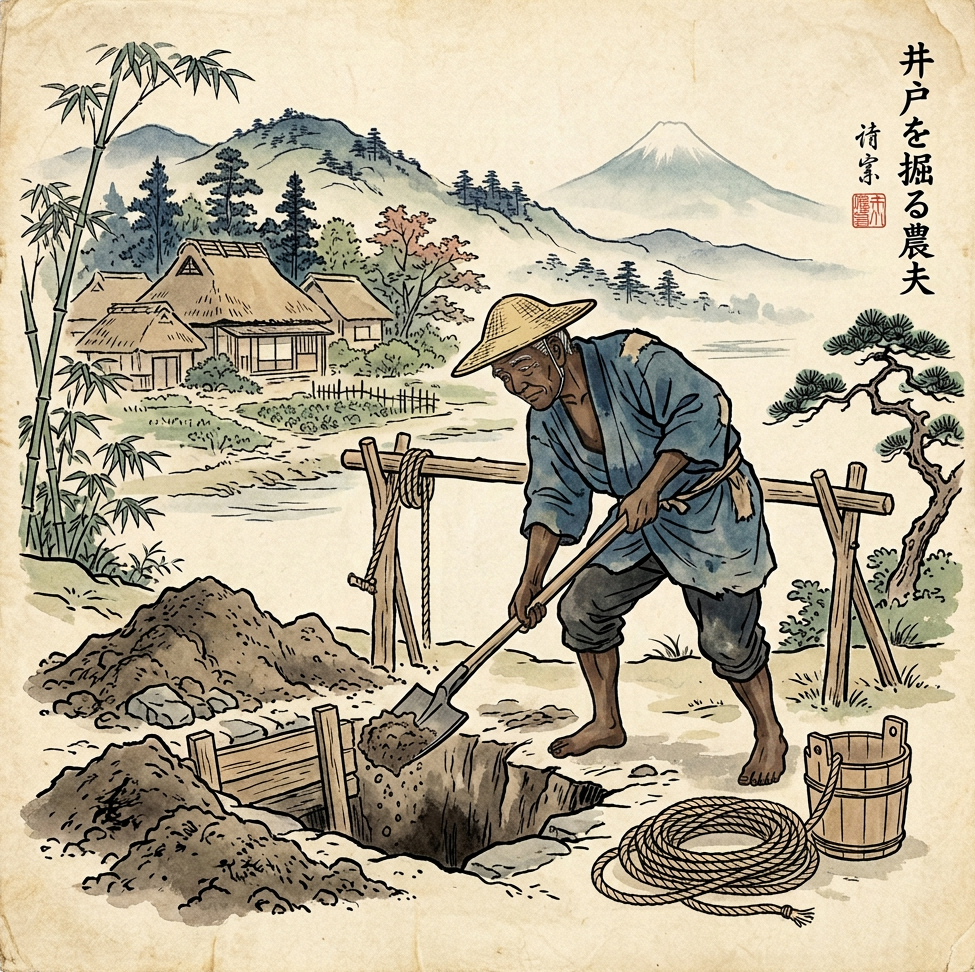
A young farmer stood at the edge of his sprawling fields, watching the morning sky burn a cloudless, blinding white. The monsoon season was late, but the underground stream still fed his crops, and his household water jars were full to the brim.
A traveler, weary and parched, staggered down the dusty road and collapsed in the shade of the farmer’s porch, begging for a skin of water.
The farmer handed him a cool cup, then immediately turned away, picked up a heavy iron shovel, and began hacking aggressively into the hard, sun-baked earth near the back of his barn.
The traveler drank greedily, wiping his mouth, and watched the farmer strike the unyielding dirt with frantic effort. Dust flew into the air, and sweat poured down the farmer’s face.
“Brother,” the traveler called out, panting from his own exhaustion, “why do you punish the earth? Your jars are full, your crops are drinking, and the sun is high. Rest your back while the water is still here; toil only when you are in need.”
The farmer did not stop his shovel. He struck the earth again, sinking the blade a few inches deeper into the resistant clay.
“If I wait for my throat to burn before I swing the iron,” the farmer gasped between strikes, “the dirt will be like iron, my arms will be weak with panic, and the shovel will break against the stone.”
The traveler shook his head at the folly of laboring under a cool sky and walked away down the road.
Three months later, the drought broke the land completely. The stream vanished into dust, the crops withered into ash, and the farmer’s household jars went dry.
The traveler, wandering back through the province on the brink of collapse, stumbled toward the farm looking for another cup of water. He found the farmer sitting calmly in the shade, lowering a wooden bucket down a deep, cool stone shaft, drawing up crystal-clear water to share with his family.
The traveler stared in wonder at the deep well, his own tongue sticking to the roof of his mouth.
The farmer handed him the fresh cup, smiled, and said, “You must dig your well before you are thirsty, for when the drought arrives, the time for building has passed, and only the prepared survive.”
FINAL THOUGHT
“He collected all the food produced in those seven years of abundance in Egypt and stored it in the cities… Joseph stored up huge quantities of grain, like the sand of the sea.” —Genesis 41:48–49
Entrepreneurs: Many founders wait until they are desperate—running out of runway, losing a key client, or hitting a sudden market downturn—to start raising capital, building relationships, or pivoting their product. By then, desperation shows, negotiating leverage is lost, and the “shovel breaks.” True entrepreneurial foresight means building your safety net, your brand equity, and your cash reserves while times are good and you still have options.
Investors: Speculators deploy capital only after a trend is already raging and obvious to everyone, often buying at the peak of the market. Wise investors build dry powder, secure strategic networks, and vet founders long before a crisis hits or an opportunity materializes. When the market turns, they are already positioned to drink deeply while others scramble in the dust.
You must learn to value proactive preparation over reactive panic in business.
— Early Boykins III


